
The global plastics industry is characterised by the significant influence of a small number of multinationals operating across the whole or a large part of the supply chain.
After a failure in South Korea at the end of 2024, followed by another in Switzerland in the summer of 2025, a new global summit is scheduled on February 7 in Geneva to secure a treaty aimed at reducing plastic pollution, in particular by reducing the volumes of plastics produced.
Plastics are durable, relatively inexpensive to produce and can take many forms, which increases its uses. It is therefore not surprising that it has become ubiquitous. Global plastic production has increased sixfold in 40 years. It continues to grow, and the OECD predicts that plastics use will triple between 2019 and 2060.
In a study conducted in 2024 and 2025, which we are publishing this month, BASIC modelled the global metabolism of plastics, from oil extraction to their use in different economic sectors. It shows that nearly a third are ultimately used for packaging.
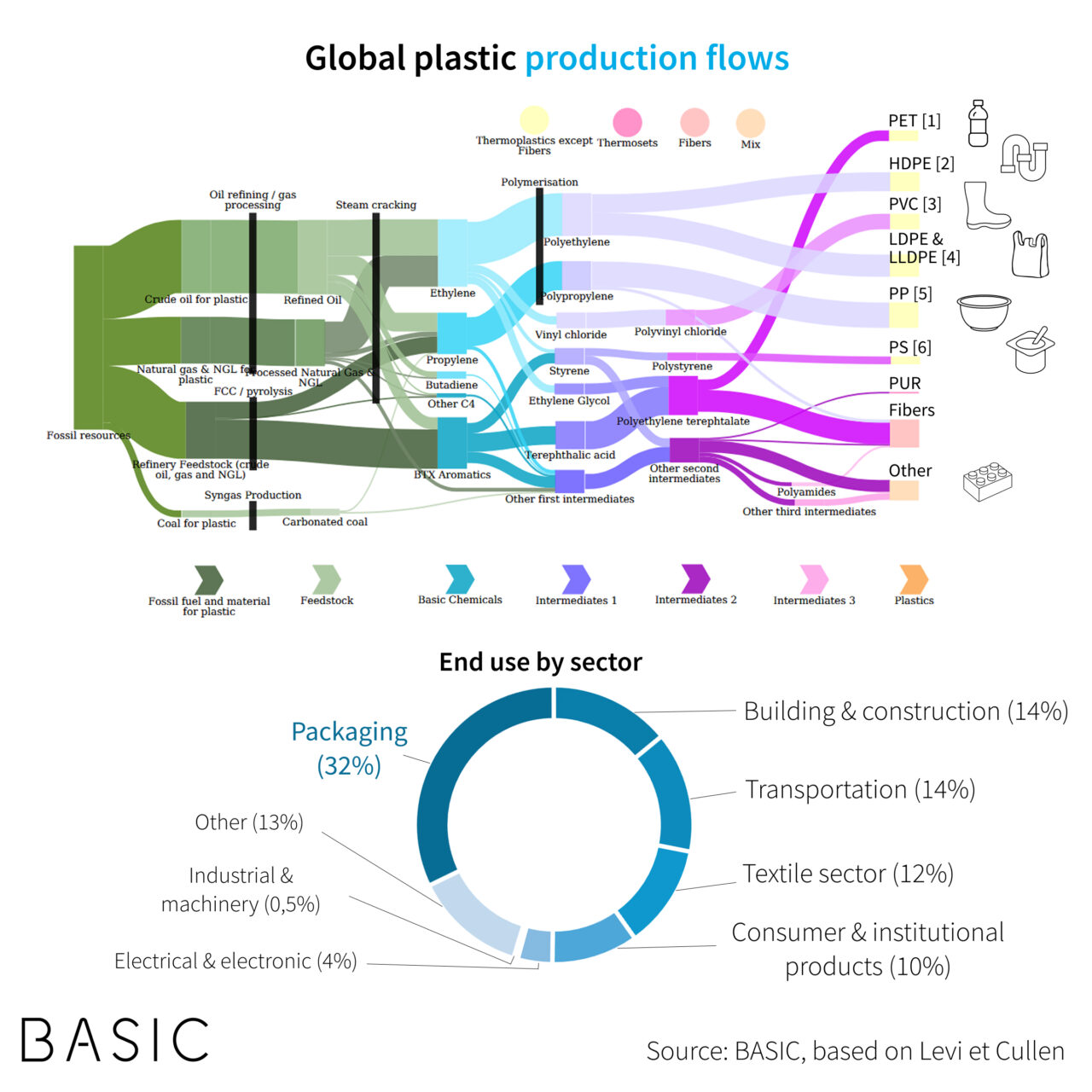
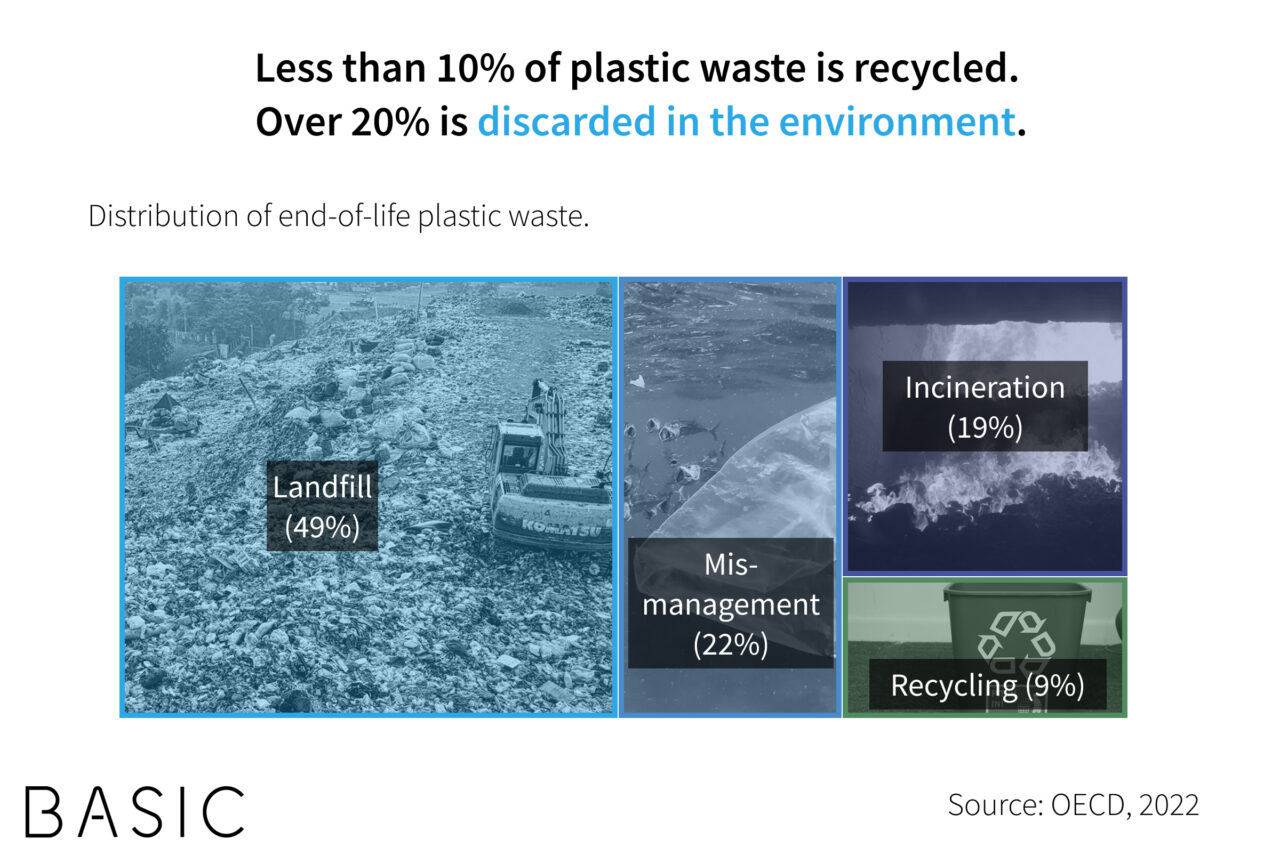
Widely used in the construction, transportation and textile industries (polyester, for example), plastics have multiple negative environmental impacts, whether they end up incinerated or, worse, buried in the ground or abandoned in the natural environment. According to a study published in 2022 by the OECD, 22% of plastic waste ends up mismanaged, burned or dumped in water.
The plastics industry touts an ideal model that is almost entirely circular, with recycling playing a major role. However, according to the OECD, only 9% of end-of-life plastics are actually recycled. Most plastics can only be converted into lower-quality materials, making the ideal of infinite reuse impossible.
Negotiations on a treaty against plastic pollution have failed so far because several countries have opposed any reference in the text to reducing plastic production, preferring to focus on the downstream part of the industry: waste management and recycling. These countries are major oil and gas producers, such as Saudi Arabia, Iran and Russia.
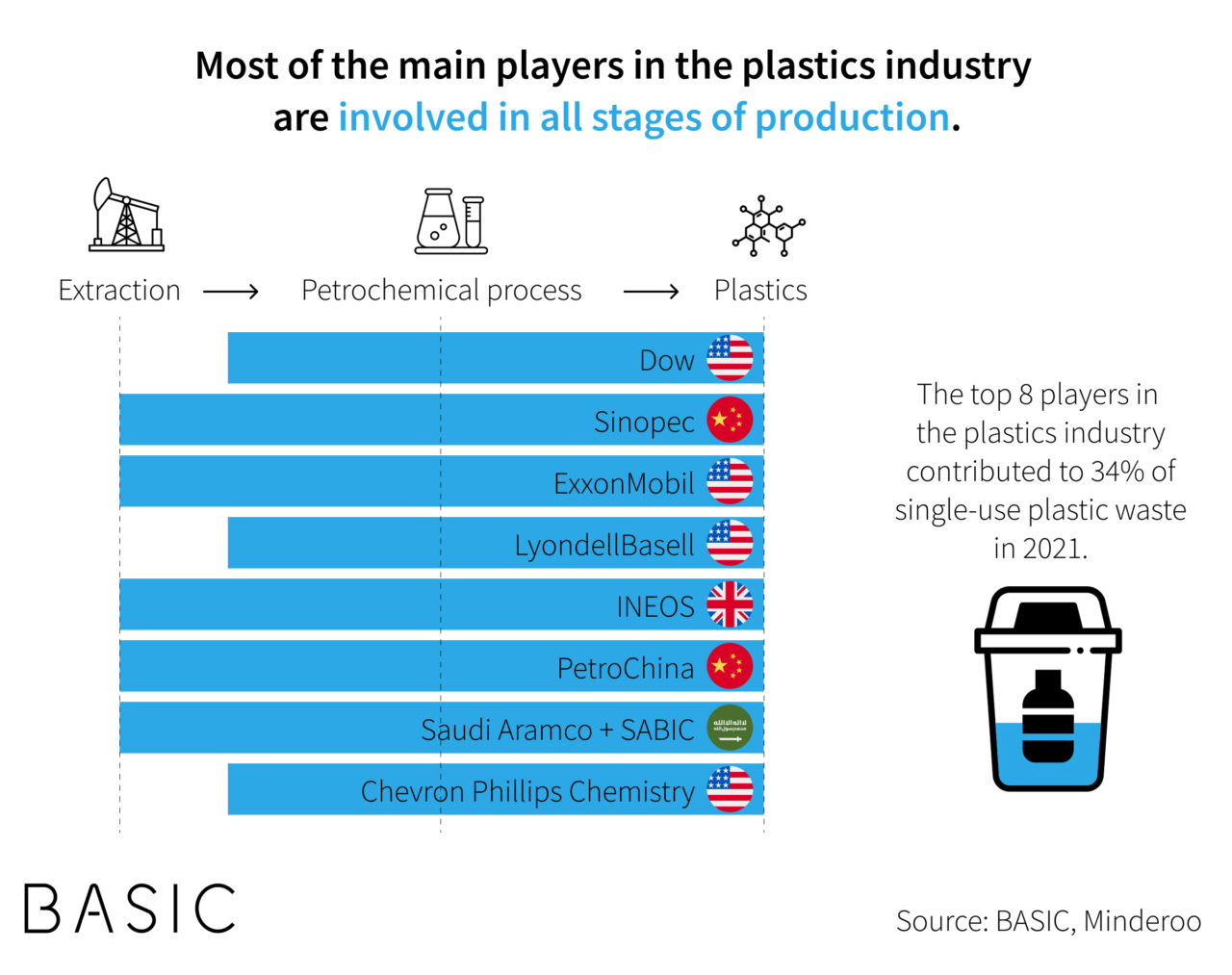
Oil and gas are the main fossil resources used in the production of plastics. Our study shows that the plastics industry is dominated by a small number of large, highly vertically integrated players, i.e. those that control the production process from the extraction of fossil resources to the production of polymers and even end-use plastic products.
The giants of the sector include oil companies ExxonMobil (United States), Ineos (United Kingdom), Saudi Aramco (Saudi Arabia), PetroChina and Sinopec (China). As a sign of the sector’s concentration, the top 8 companies in the sector contribute to one-third of single-use plastic waste, according to a calculation based on data collected by the Minderoo Foundation.
Our study shows that oil and gas companies see plastics as a growing market opportunity in a context where the ambitions of the Paris Agreement to combat global warming are encouraging a reduction in the use of fossil fuels as an energy source. Plastics, which were originally just a by-product of the oil industry, are reaching an increasingly central place in the business model of petrochemical groups.
👉 Read our study on the plastics industry.
Photo: Alexander Grey / Unsplash.